How to Protect Your Hearing Aids from Humidity, Moisture, Sweat, Rain, and Summer Heat
Anyone who’s spent a late-summer afternoon near the Chesapeake knows the
By: Dr. Britney Ometz | April 1, 2026
Today’s hearing aids are sophisticated electronic devices, made to perform so well that you almost forget about them. But even when your hearing aids aren’t on the forefront of your mind, it’s crucial to keep up with routine maintenance so you get the best performance and sound quality.
Different hearing aid models and types require different care. You should always follow the manufacturer’s cleaning instructions and consult with your hearing care professional. Today, we’re going to walk through the basics on how to clean your hearing aids. At Anne Arundel Audiology, we’re here to help with all your hearing care needs.
Key Takeaways
Earwax buildup naturally accumulates in the ear canal, and some folks have more earwax than others. It doesn’t mean anything is wrong with your ear—ear wax is normal and natural, but it can present a hazard to your hearing aids.
Moisture is another natural occurrence. A humid climate (especially here in Maryland) and the weather cause moisture. Humans sweat, skin cells slough off, and cosmetic products like hair spray can clog microphone covers and reduce the performance of your hearing aids.
Of course, hearing aids that aren’t regularly cleaned also put your ears at risk for irritation and even ear infection. Like any foreign object that comes in contact with your body, it’s important to keep your hearing aids hygienic and properly maintained. Even aids and devices that only come in contact with the outer ear should be kept clean.
The other truth about hearing aid maintenance is that hearing aids are an investment in your ear health. You want to protect that investment so it lasts and performs as well and as long as possible. Hearing aids are small, but they are powerful and complex. Microphone openings, wires, battery compartments, and other tiny components can quickly get clogged or stopped up.
If you notice reduced sound or distortion with your hearing aids, contact your hearing care provider right away. We’re here to help you, and a DIY “deep cleaning” can damage hearing aids, causing issues to get worse. It’s better to ask a professional for guidance about your hearing devices if you aren’t sure or no longer have the manufacturer’s instructions.
So, how do you clean hearing aids? Can you clean them at home? There are some things you can and should do at home to maintain your hearing aid’s performance, but you should never assume hearing aid instructions are “one-size-fits-all.” The recommendations for your spouse or friend’s hearing aids may be very different from yours.
Each type of hearing aid (BTE hearing aids, RIC hearing aids, and ITE hearing aids) has very distinct and unique cleaning needs. But beyond the specific type of aid, cleaning instructions can differ between hearing aid brands and models.
You may need to clean the contacts for rechargeable hearing aids. Battery-powered models may also need cleaning, but with attention to different parts.
Some hearing aid brands provide clear and specific guidance, others can be a bit more ambiguous. When you work with a hearing professional at Anne Arundel Audiology, you can trust that we’ll walk you through the right steps for your particular device.
When in doubt, contact your hearing specialist for guidance. We want to help you feel confident about your hearing aids, because when you feel positive, you’re more likely to use them regularly, which is the most critical factor for hearing health.
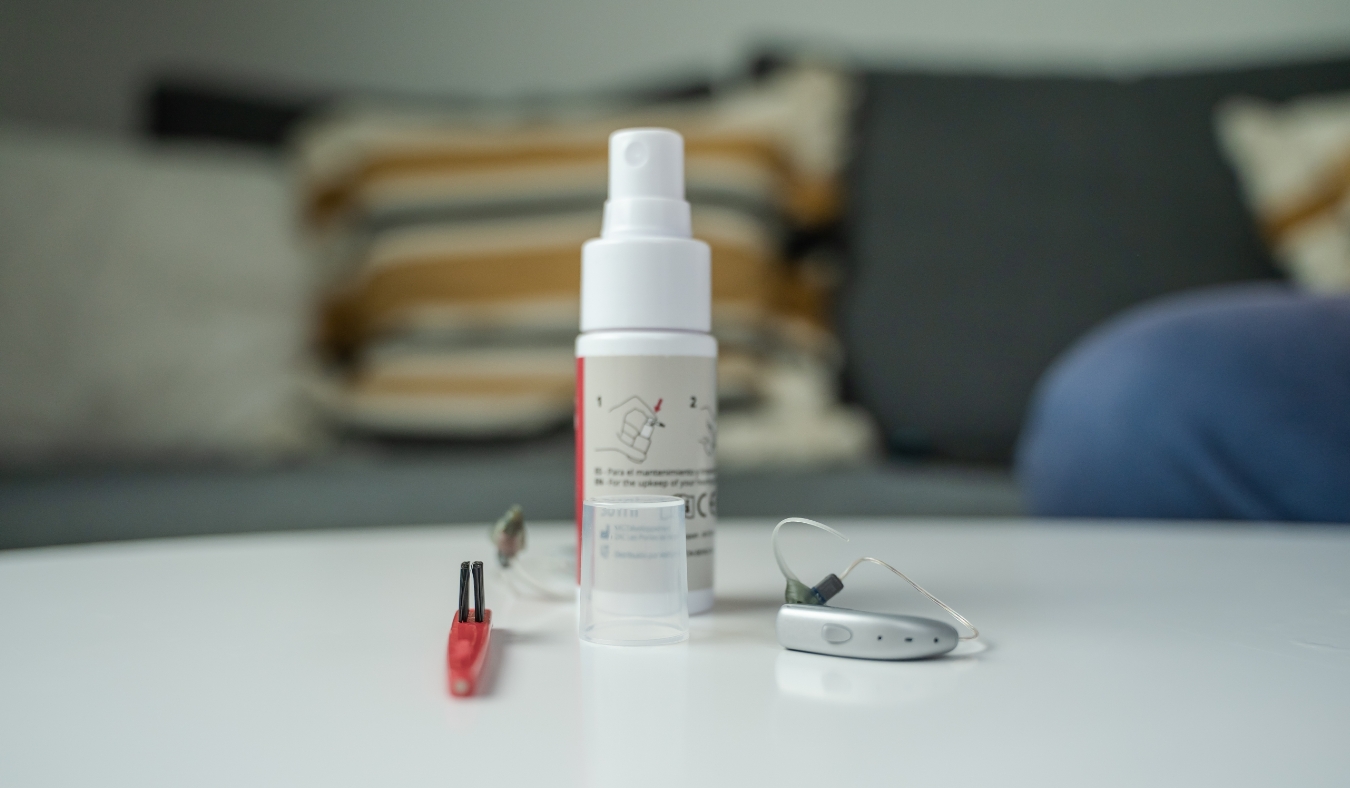
There is some daily maintenance that most hearing aids require. Often it includes wiping them off with a dry or soft cloth. Your manufacturer may include a special microfiber cloth with your hearing aids, or you can purchase one separately as needed.
Often, the other daily cleaning tool is a small brush. A cleaning brush lets you clear out debris and skin cells that can build up on your hearing aids. In some cases, there may be a pen-like tool or a pick at the end of the brush. Some hearing aids do well with a wax pick to ensure the crevices stay clean. Often, this looks like a small wire loop at the end of a thin tool. Instructions for your specific hearing aid brand and model will detail the best way to use these tools safely.
One of the most important things you can do to maintain your hearing aids is to put them in a protective case when you aren’t wearing them. Most cases have a soft surface that is made to fit your device’s shape, but even a general case is a good idea.
For most regular at-home care, you can follow the steps below. Keep in mind, though, that hearing aids will require professional cleaning as well. Even if you’re diligent about maintenance, it’s a good idea to have them professionally evaluated at intervals recommended by your hearing professional.
For day-to-day hearing aid care, follow these steps.
Like any hygiene process, clean hands give you a clean start. It helps you avoid introducing debris and microbes into your body.
Use a soft or microfiber cloth and gently wipe the exterior surfaces of your hearing devices. Focus on just the exterior and avoid pushing debris into the microphone openings or the sound outlets.
Use a hearing aid brush or manufacturer-approved cleaning tools. Brush away any visible earwax buildup. Work over a soft surface and hold the devices gently to avoid any accidental damage.
Open the battery door if you have battery-operated aids. You’ll want to store them in their protective case or a dry, clean container. Some manufacturers recommend a hearing aid dehumidifier (check with your hearing specialist). Keep your hearing aids away from direct sunlight and extreme temperatures.
Regular hearing aid home care is a worthwhile and important way to protect your hearing devices. However, you should still follow the manufacturer’s recommended cadence for professional cleaning.
There are several different types of hearing aids—behind-the-ear (BTE), receiver-in-canal (RIC), and in-the-ear (ITE). The cleaning process for each can vary widely. There are certain features, depending on your hearing aid type, that you should be aware of when you clean.
BTE hearing aids feature slim hearing aid tubes that fit around the ear. The tubes can become particularly challenging to clean, especially if you have a tendency to accumulate earwax.
Knowing how to clean hearing aid tubes can take practice. Many BTE hearing aids include a bulb blower to clean with air. This can be helpful, but the best tip is to talk to your hearing practitioner before you try to clean the delicate, slim tubes.
With BTE hearing aids, the tubing will require periodic replacement. Contact your hearing care provider for tube replacement and always follow the recommended cadence for maintenance and replacement.
RIC hearing aids include a receiver that fits directly in your ear canal. Many of these feature a wax guard and/or hearing aid wax filters. Note that some ITE’s also have a wax guard. These are also very complex (and small) pieces of equipment. So again, it’s best to follow the manufacturer’s instructions.
Generally speaking, the wax guards should be replaced, not cleaned. It’s hard to get good performance from an old wax guard. Domes may also need periodic replacement. Use a soft cloth to wipe these hearing aids gently. Be mindful to avoid pushing any debris into the receiver.
ITE model hearing aids are another style that you may need to delicately clean. For these, hearing aids, professional cleaning is often recommended more frequently. The microphone covers and sound outlets can be sensitive to moisture exposure, and you need to pay extra attention to the vents.
Again, with ITE hearing aids, a soft cloth is your best bet, along with proper storage. If you need further cleaning, follow the advice of the manufacturer and your ear care professional.
Because every style of hearing aids (and every model) is slightly different, we encourage patients to bring their devices into Anne Arundel Audiology for a quick inspection regularly. We can help guide you with the best way to keep your hearing aids in optimal shape.
While there may be many different types of hearing aids and many different instructions to clean them, there are some universal rules you should follow, unless you have very specific instructions otherwise.
Avoid:
If you’re asking, “Can you clean hearing aids with alcohol (or another cleaner)?” the safest answer is to consult with your hearing professional first.
Hearing aids don’t need a lot of care and maintenance, but they are sophisticated medical devices, so they do need some regular attention.
A regular cleaning schedule helps you maintain clear hearing aids with optimal performance. Schedule a professional cleaning regularly and watch for signs that your hearing aids may need attention.
Professionals can use specialized tools to clean your hearing aids that aren’t available in home hearing aid cleaning kits. Tiny vacuum systems and ultraviolet light disinfection are just a couple of examples.
It truly depends. Some patients can benefit from approved hearing aid cleaning tools. There are certain manufacturers that may suggest hearing aid cleaner wipes or specific tools made for your particular devices.
Remember, though, hearing aids are different. Not all cleaning kits will work for all hearing aid models. Generic “one-size-fits-all” kits that you find online may not include the correct components and tools for keeping your hearing aids working well.
The best guidance is to ask your provider which tools are right for your device and then stick to the recommendations provided.
To keep your hearing aids as clean as possible:
By taking these cautionary steps, you will extend the life of your hearing aids and prevent accidents.
Different hearing aid models and styles require personalized care. Your hearing aids are uniquely made for your body and your needs. Cleaning them also requires personalized attention.
Your hearing care provider understands your specific devices and the manufacturer’s instructions. Moreover, we’re here to help you. Bring in your devices if you are unsure, schedule regular cleanings, and avoid chemical or DIY fixes.
With a new hearing aid purchase, you’ll receive a cleaning kit specific to your aids. You can also buy extra tools, but rest assured, at Anne Arundel Audiology, we’ll make sure we give you everything you need to start off with success.
Your hearing aids help you stay connected to the people and moments that matter. With proper care and the guidance of a trusted hearing specialist, they can continue to deliver clear sound for years to come. Reach out to our office today to schedule a cleaning and to make sure your hearing aids are giving you optimal performance.
Tags: hearing aid cleaning, hearing aid maintenance, how to clean hearing aids

Anyone who’s spent a late-summer afternoon near the Chesapeake knows the
By: Dr. Britney Ometz | July 29, 2026
Anyone who’s flown out of BWI knows the drill. Gate changes mumbled
By: Dr. Britney Ometz | July 26, 2026

People often associate hydration with things like thirst, headaches or dry
By: Dr. Britney Ometz | June 25, 2026